

What angle to sharpen HSS drill bits?
It is annoying when your drill bit won't cut. Are you wondering what angle you need to sharpen your HSS drill bits to get the job done?The most common angle for sharpening HSS drill bits is 118 degrees. However, the best angle depends on the material you are drilling. Softer materials like wood and aluminum benefit from a sharper 118-degree angle. Harder materials like steel and stainless steel work better with a 135-degree angle.
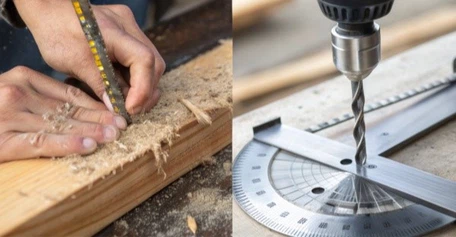
If you don't know the right angle, you'll be stuck. Let's explore the world of HSS drill bit angles and unlock the secrets to perfect drilling.
What is the angle of a HSS drill?
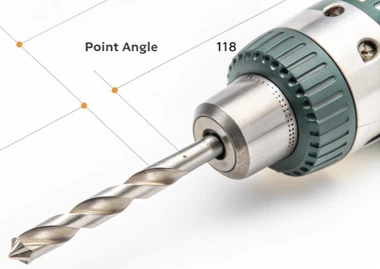
HSS drill bits come in different angles to suit various materials. The 118-degree angle is the general-purpose standard. It works well on materials like wood, plastic, and aluminum. Its sharper point allows for faster penetration. However, it may "walk" or wander on harder surfaces. A center punch can help prevent this. On the other hand, the 135-degree angle is better for harder materials like steel, stainless steel, and cast iron. Its flatter point distributes pressure, reducing wear and allowing for smoother drilling. These bits often have a split point to prevent walking.
I've found that understanding these angles is key to efficient drilling. I once had a project where I was drilling through stainless steel with a 118-degree bit. It was a disaster! The bit kept wandering, and I couldn't get a clean hole. Once I switched to a 135-degree bit, the process became much smoother and more accurate. It's all about using the right tool for the job. Also, other angles exist, a 90-degree drill point angle is suitable for thin materials. 140-degree drill point angle1 is optimal for hardened materials and 150-degree drill point angle is specialized for harder metals.
[1] Learn about various drill point angles and how they impact drilling efficiency and material compatibility
| Angle | Material | Characteristics |
| 118° | Wood, Aluminum | Sharper point, faster penetration |
| 135° | Steel, Cast Iron | Flatter point, distributes pressure, resists wear |
Which is better, 118 or 135-degree drill bits?
Choosing between 118 and 135-degree drill bits can be tough. You want to pick the one that works best, right?
Neither angle is inherently "better." The ideal choice depends on the material. 118-degree bits are more versatile for softer materials. 135-degree bits excel on harder materials due to their more aggressive cutting action and reduced walking.
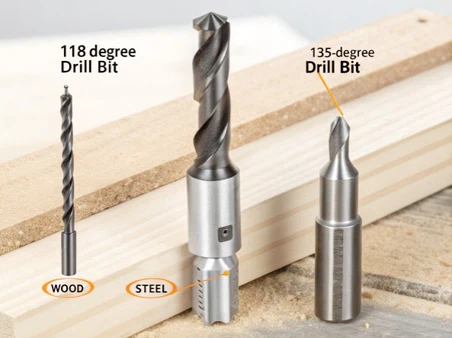
The 118-degree drill bit is often considered a general-purpose option. It's suitable for a wide range of materials. These include wood, plastic, and softer metals like aluminum. It provides a smoother, more precise cut. The shallower point angle generates less heat. This reduces wear and prolongs the bit's life. The 135-degree drill bit is designed for harder materials like stainless steel and cast iron. The steeper point angle allows it to bite into the material more effectively. These bits are generally more durable and resistant to wear. The stronger cutting action is advantageous when working with tough or dense materials.
I remember one time I was trying to drill through a piece of hardwood with a dull 135-degree bit. I was struggling to get the hole started, and the bit kept slipping. I switched to a sharp 118-degree bit, and it went through like butter. It taught me the importance of not only choosing the right angle but also keeping my bits sharp. Keep in mind that a 135-degree drill bit often made of tool steel with some cobalt added, they are harder and last longer than the more common 118 degree 'black' oxide drill bits, but are more brittle.
| Feature | 118-degree Drill Bits | 135-degree Drill Bits |
| Versatility | Good for wood, plastic, aluminum | Designed for stainless steel, cast iron, tough alloys |
| Cutting Action | Smoother, more precise cut | More aggressive, stronger cutting action |
| Heat & Wear | Generates less heat, reduced wear | More durable and resistant to wear |
| Best Use | General purpose drilling, softer materials | Harder materials, tough applications |
What is a 135-degree drill bit used for?
So, you have a 135-degree drill bit. Are you scratching your head about when to use it?
A 135-degree drill bit is best for drilling into hard materials like stainless steel, cast iron, and other tough alloys. Its steeper point angle provides a stronger cutting action. This allows it to bite into the material more effectively, reducing walking and wear.
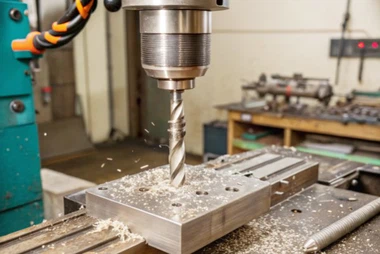
The design of a 135-degree drill bit makes it ideal for specific tasks. The wider angle distributes drilling pressure over a larger area. This reduces tool wear and allows for smoother, more controlled drilling. These drill bits often feature a split point. It improves self-centering and reduces the effort needed to drill. The steeper angle requires more force to penetrate the material. Making prior pointing essential to prevent shifting. HSS drill bits are a must-have tool for drilling a wide variety of materials, from wood to hard metals like stainless steel or titanium alloys.
In my experience, 135-degree bits are a lifesaver when working with hardened materials. Once, I was building a custom motorcycle and needed to drill through a thick steel frame. A standard 118-degree bit wouldn't even make a dent. I switched to a 135-degree cobalt bit, and it sliced through the steel with ease. I also learned that the primary relief angle1 generally ranges from 6°-15°. For drilling hard material, or using drills with large a diameter and a large point angle, the relief angle should be small.
[1] Understand how relief angle affects drilling performance and tool longevity in different materials.
| Material | Characteristics | Benefits |
| Stainless Steel | Hard, tough, corrosion-resistant | Efficient cutting, reduced walking, longer tool life |
| Cast Iron | Brittle, strong, wear-resistant | Smoother drilling, controlled material removal |
| Hard Alloys | High tensile strength, heat-resistant | Prevents wear, improves accuracy when drilling |
Choosing the right angle for sharpening your HSS drill bits makes a big difference. Match the angle to the material for optimal drilling.